
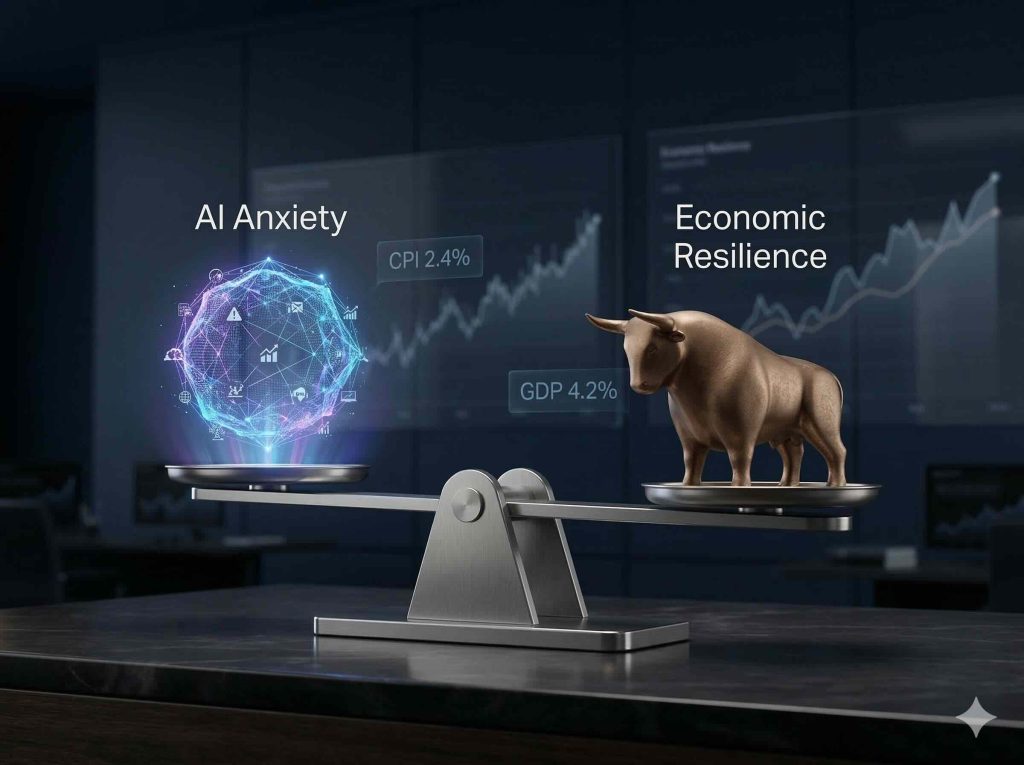
In February, the narrative on Wall Street experienced a distinct pivot. For much of the past two years, artificial intelligence was viewed strictly through the lens of a technological boom, driving mega-cap tech valuations to historic highs. However, last month, the conversation shifted from “AI as a growth engine” to “AI as a macroeconomic disruptor.” Fears surrounding potential job displacement in traditional, capital-light industries sparked bouts of volatility, temporarily hitting sectors like transportation and logistics as investors wrestled with how these technologies will reshape the labor force.
Simultaneously, markets digested shifting geopolitical currents, including proposed trade tariffs and ongoing international tensions. Despite these sensational headlines, the underlying U.S. economy proved remarkably resilient.
This tug-of-war between future technological anxieties and present-day economic strength left broader equity markets churning sideways to close out the month. It serves as a timely reminder that late-stage bull markets are often characterized by these exact types of sentiment swings, reinforcing the need for a steady, objective approach to wealth management.
Let’s Get Into the Data
- Inflation Continues to Cool: The Consumer Price Index (CPI) for January (reported in February) showed headline inflation falling to 2.4% year-over-year, down from 2.7% in December. Core CPI, which strips out volatile food and energy prices, matched this cooling trend at 2.5%.
- A Welcome Jobs Surprise: After significant downward revisions revealed 2025 was a historically weak year for job creation (just 181,000 jobs added all year), the labor market showed renewed life. Nonfarm payrolls grew by a better-than-expected 130,000, with the private sector adding 172,000 jobs, helping to ease immediate recessionary fears.
- Robust Economic Growth: The U.S. economy continues to run at a solid pace. Fourth-quarter 2025 GDP is tracking at an impressive annualized rate of 4.2% to 4.4%—its fastest pace in two years—driven largely by resilient consumer spending.
What Does the Data Add Up To?
Right now, the Federal Reserve is navigating a delicate “Goldilocks” scenario. Economic growth remains robust, while inflation continues its slow, albeit bumpy, descent toward the central bank’s 2.0% target. Consequently, the Fed opted to hold interest rates steady at their most recent meeting, preferring to wait and see how incoming economic data and new administration policies materialize before committing to further cuts.
However, the bond market is telling a slightly more cautious story. Late in February, despite a hot Producer Price Index (PPI) reading, the 10-year Treasury yield surprisingly dropped below 4.00%, settling near 3.96%. Ordinarily, strong growth and inflation data would push yields higher. This unusual dip suggests a “flight to safety” among institutional investors who are hedging against potential future economic disruptions, perhaps driven by those very AI-related macro fears.
For the broader economy, this means we are in a transitional phase. We are moving from an environment dictated purely by inflation battles to one focused on sustaining economic growth amid rapid technological and political shifts. The Fed’s patience is a sign of stability, but it also signals that the easy gains of the early recovery are behind us, and careful asset allocation will be paramount moving forward.
Number of the Month
2.4%
That is the current year-over-year headline inflation rate, representing a significant victory from the peak inflation of recent years. For retail investors and retirees, this number is critical because it means the silent tax of inflation is finally losing its bite. At Suttle Crossland Wealth Advisors, we know that preserving your purchasing power is just as important as growing your portfolio. This stabilizing inflation rate allows us to implement highly effective, tax-focused retirement planning strategies with greater predictability, ensuring you keep more of what you earn and maintain peace of mind through your life’s transitions.
Market Performance
Equity Markets in February
- S&P 500: Closed the month relatively flat near 6,878, weathering late-month volatility to retain a modest 0.5% gain for the year as market leadership continued to broaden beyond the tech sector.
- Dow Jones Industrial Average: Displayed resilience compared to its tech-heavy peers, finishing February up 1.9% year-to-date.
- Nasdaq Composite: Felt the brunt of the AI-related macro anxieties and profit-taking, losing roughly 2.5% so far in 2026.
Bond Markets in February
- 10-Year U.S. Treasury: Yields fell sharply late in the month to 3.96% as investors sought safety, pushing underlying bond prices higher.
- Bloomberg U.S. Aggregate Bond Index: Posted modest positive gains (+0.1%) as falling long-term yields offset sticky short-term rates.
Looking Ahead
As we move into March, all eyes will remain on the Federal Reserve and the upcoming transition of power, with Kevin Warsh nominated to succeed Jerome Powell as Fed Chair in May. Markets will be highly sensitive to any rhetoric from Warsh regarding his future monetary policy stance, especially as investors try to gauge his appetite for future rate cuts.
Additionally, investors should pay close attention to the next round of corporate forward guidance. Wall Street will be looking for clarity on how companies are actually utilizing artificial intelligence to drive efficiency, separating the genuine beneficiaries from the speculative noise.
The Smart Investor
With tax season officially upon us, March is the ideal time to ensure your financial house is in order. Instead of reacting emotionally to dramatic headlines about AI or geopolitics, focus on what you can control: tax efficiency and asset location. You have until the mid-April tax filing deadline to make your 2025 IRA and Health Savings Account (HSA) contributions. If you experienced a major life transition last year—such as retirement, the sale of a business, or a significant change in income—now is the moment to explore strategic Roth conversions before your tax picture is finalized.
At Suttle Crossland Wealth Advisors, our fee-only, fiduciary approach means we sit on the same side of the table as you. We build resilient, tax-optimized plans designed to weather market shifts and keep you focused on your long-term goals. If you have questions about your portfolio or your 2025 tax strategies, please reach out to our team today.